

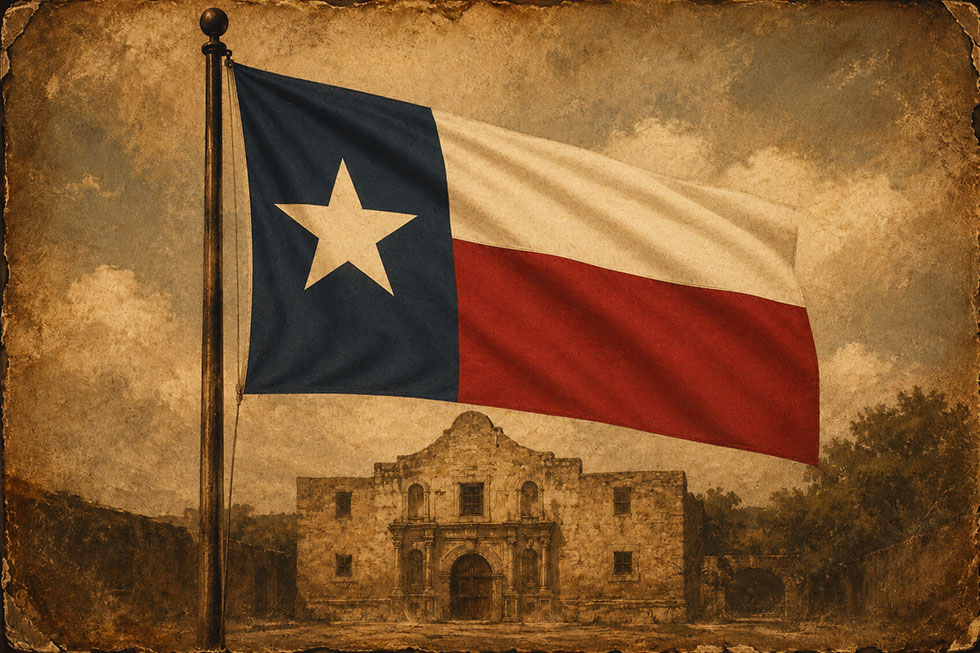
 Your Texas flag once represented a country, and that is only the beginning of its story. The familiar red, white, and blue design began as the national banner of the Republic of Texas before it became a state symbol.
Adopted in 1839, its lone white star and three bold colors still carry a clear message of loyalty, courage, and self-rule.
That story still feels close across North Texas. The same emblem that flew during the Republic era became part of the identity of the communities that grew up across Dallas, Collin County, and the northern Blackland Prairie.
Today, it remains a familiar sight outside homes, schools, ranches, municipal buildings, HOAs, banks, restaurants, and businesses throughout the Dallas-Fort Worth metroplex.
Based in Plano, Flagmobile provides American-made state banners and professional flag replacement through our premier flag service. Owner and operator Robert Dixon takes this work personally because the symbol represents the independent spirit that shaped the region we serve.
Who Created the Lone Star Design?
Artist Peter Krag prepared the best-known surviving color sketch of the design and seal. The republic paid him $10 for the work, a modest sum for an image that would become one of America’s most recognizable civic symbols.
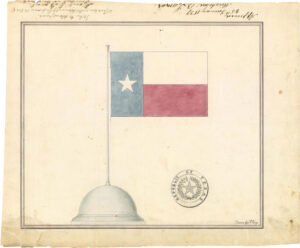 The Lone Star Flag was approved with signatures from President Mirabeau B. Lamar, House Speaker John M. Hansford, and Senate President David G. Burnet. Their signatures remain visible on the original document.
Some people credit Charles Bellinger Stewart with creating the design. His descendants preserved another early drawing, but historians have raised questions about its authenticity. Krag’s original sketch has the strongest surviving documentary record.
The single star gave the new republic a direct visual identity. It separated the nation from the many banners carried during the revolution and presented one clear symbol to residents and other countries.
Robert explains, “The lone star is a reminder of Texans’ resolve to fight their way to independence.”
What the Star and Three Colors Represent
The Lone Star Flag uses a simple design, but each part carries meaning.
Officially, red represents bravery, white represents purity, and blue represents loyalty. The red and blue match the colors on the United States flag. The white five-pointed star sits centered in the blue field, with one point facing upward.
The lone star represents Texans united by a shared commitment to God, state, and country. It also honors Texas’s independent history as a sovereign republic before joining the United States in 1845.
“Texas represents the American spirit in its purest form,” Robert says. “The design supports that idea without needing a complicated seal, motto, or collection of smaller symbols. One star says enough.”
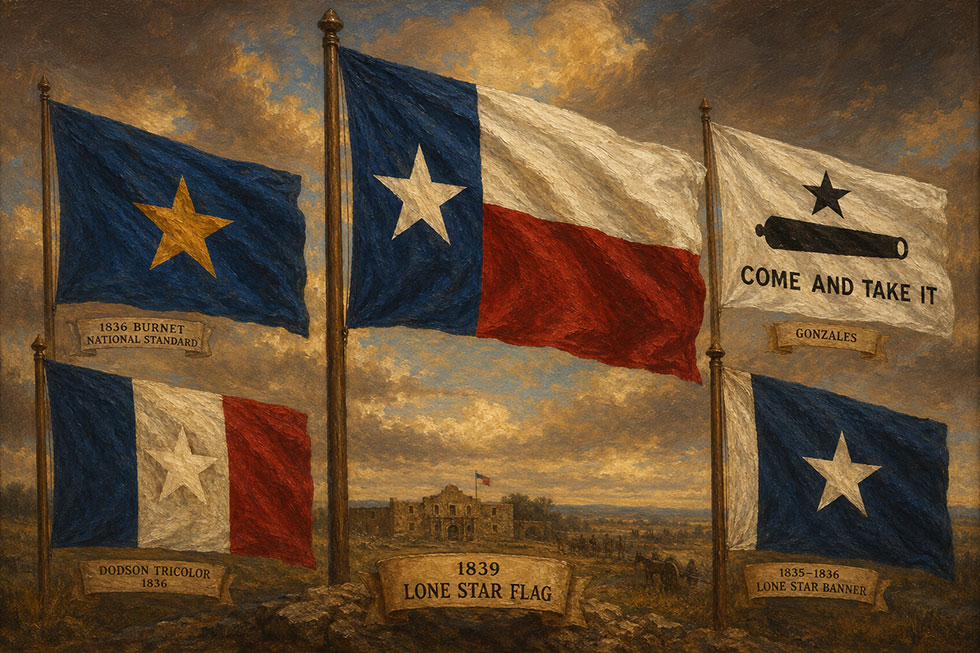
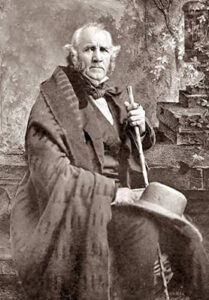 General Sam Houston’s connection to the Lone Star story began on the battlefield. As commander of the Texian Army, he led the victory at San Jacinto on April 21, 1836. That victory secured the republic’s independence and helped turn the Lone Star into a lasting symbol of its people’s determination.
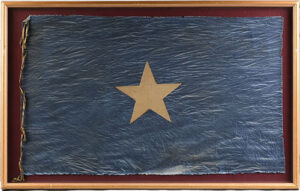 After becoming the republic’s first elected president, Houston approved its first official National Standard on December 10, 1836. The design featured a solid blue field with a large gold star in the center. Often called the Burnet banner, it served as the national standard until the familiar red, white, and blue design took its place on January 25, 1839. It continued to serve as a war banner until annexation in 1845.
Houston did not design or approve the current version. His successor, President Mirabeau B. Lamar, signed that design into law. Still, Houston’s military leadership and presidency helped establish the independence, identity, and national traditions that gave the later design its meaning.
“Sam Houston helped secure the independence that the Lone Star still represents,” Robert Dixon says. “His leadership made that symbol part of a real sovereign nation, not simply an idea.”
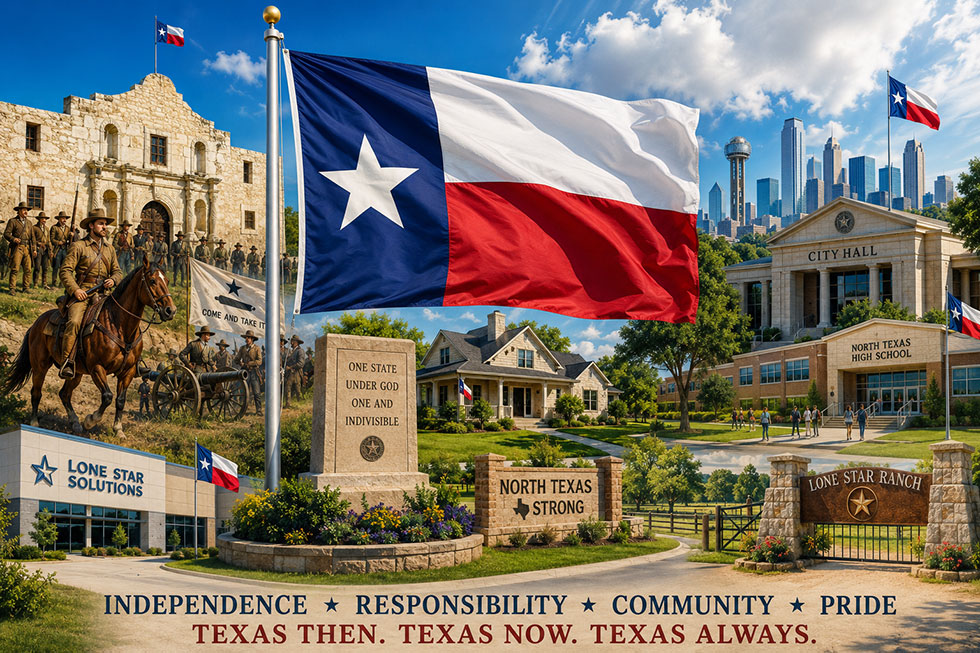
“Self-sufficiency has always been a core value for Texans,” says Robert.
That belief fits the history behind the single star. It also fits the communities Robert serves, from established properties in Plano and Frisco to new developments around Prosper, Celina, Melissa, and Anna.
Why Made-in-the-USA Quality Matters
Flagmobile in Plano, Texas, sells state banners made in the USA because their origin should match the pride they represent. Customers should know where the product came from and trust that it was produced by experienced American manufacturers.
Robert Dixon founded the company in Plano in 2002 around personal service and long-term customer relationships. Flagmobile remains a small local business by design, giving Robert direct involvement in the products, installation work, and property care.
Outdoor materials face constant stress. Sunlight fades dyes. Wind pulls at seams and fly ends. Rain adds weight, and storms can strain clips, ropes, pulleys, and stitching. Commercial-grade construction and strong stitching help a new banner hold its appearance longer under North Dallas conditions.
Made-in-the-USA sourcing also supports the larger message behind the emblem. It connects local service with American labor, manufacturing standards, and pride in the country.
 Respect Does Not End When It Comes Down
 Respect Does Not End When It Comes Down
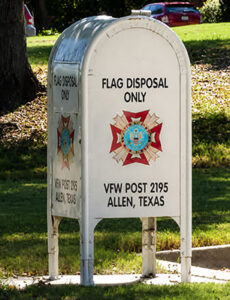
A worn civic symbol should not be treated like ordinary trash. Respectful removal matters because the values it represents do not disappear when the material reaches the end of its outdoor life.
Our premier flag service includes removal of worn material and help with proper flag retirement. For worn U.S. banners, Robert routinely transfers them to the VFW or American Legion for an appropriate ceremony. State emblems are also taken down carefully and handled with respect.
This process gives property managers, HOAs, schools, municipalities, and business owners a complete service. You do not need to climb the pole, find the right size, dispose of the old material, or repair worn hardware on your own.